

Recording high-quality audio at home can feel surprisingly difficult. You might have a decent room, a capable laptop, and solid software—yet your recordings still sound noisy, thin, or harsh. This is often where microphone choice makes the biggest difference.
Among large-diaphragm condenser microphones, the RØDE NT1 Signature Series consistently appears in conversations about clean, professional sound. It’s widely used for music production, vocal recording, streaming, and podcasting—but does it actually live up to the reputation?
This practical review breaks down how the RØDE NT1 Signature Series condenser microphone performs in real-world use, what it’s best suited for, and what to consider before choosing it for your setup.
Why Microphone Choice Matters for Home Recording
Many creators underestimate how much a microphone shapes the final sound. Even the best editing software can’t fully fix poor audio captured at the source.
A large-diaphragm condenser microphone like the RØDE NT1 is designed to:
- Capture more vocal detail
- Reproduce natural tone and depth
- Pick up subtle dynamics in speech and singing
However, condenser microphones are also more sensitive than dynamic mics. That sensitivity can be a strength—or a weakness—depending on your recording environment.
This makes choosing the right condenser mic especially important for home studios.
Overview of the RØDE NT1 Signature Series
The RØDE NT1 Signature Series is a side-address condenser microphone built for studio-quality recording. It’s part of RØDE’s long-running NT1 line, known for ultra-low self-noise and neutral sound reproduction.
At its core, this microphone is designed for creators who want:
- Clean, transparent audio
- Minimal background hiss
- A versatile mic that works across multiple content formats
Unlike USB microphones, the NT1 uses an XLR connection, which means it requires an audio interface or mixer to operate.
What Comes in the Box (And Why It Matters)
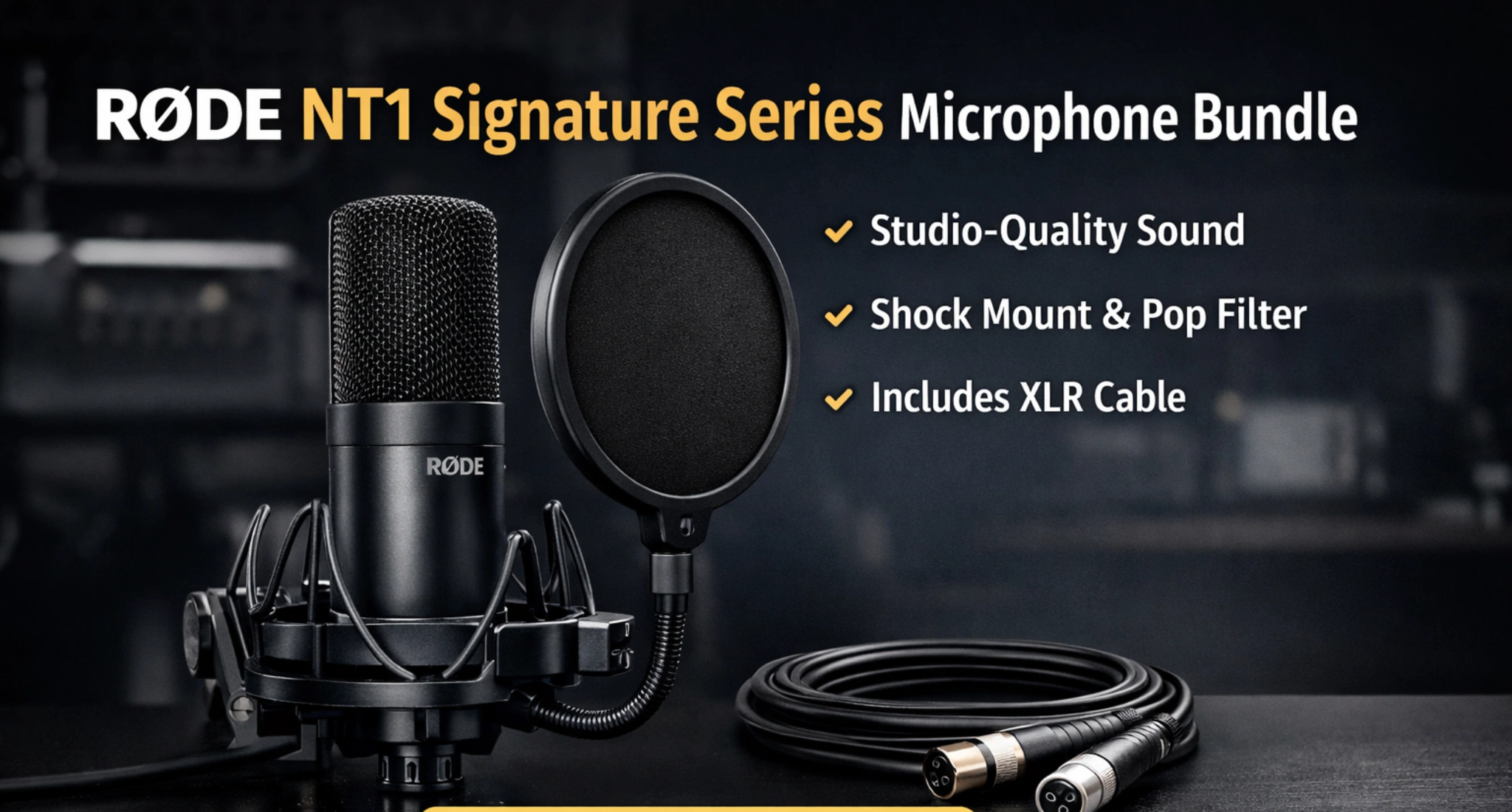
One practical advantage of the RØDE NT1 Signature Series is that it ships as a complete recording bundle, not just a standalone mic.
Inside the box, you’ll typically find:
- The NT1 Signature Series microphone
- A studio-grade shock mount
- A pop filter
- An XLR cable
For beginners, this matters more than it sounds. The shock mount reduces vibrations from desk movement, while the pop filter helps control plosive sounds like “P” and “B.” Having these included saves time, cost, and guesswork.
Sound Quality and Performance in Real-World Use
Vocal Recording Clarity
The NT1 is often praised for its neutral, natural vocal tone. It doesn’t artificially boost highs or lows, which makes it easier to shape vocals during mixing rather than fighting exaggerated frequencies.
For singers and voice-over artists, this results in:
- Clear mids
- Smooth high frequencies
- Minimal harshness
Extremely Low Noise Floor
One of the most defining features of the RØDE NT1 condenser microphone is its ultra-low self-noise. This makes it especially useful for:
- Quiet vocal passages
- Spoken-word recordings
- ASMR-style content
In practice, recordings sound clean even before applying noise reduction.
Handling Plosives and Sibilance
With proper mic placement and the included pop filter, the NT1 handles plosives well. Sibilance is present—as with most condenser microphones—but not overly aggressive.
Using the RØDE NT1 for Different Use Cases
Music Production
For home studio musicians, the NT1 works well for:
- Lead vocals
- Acoustic guitar
- String instruments
- Light percussion
Its transparent character makes it a solid choice for layered recordings.
Podcasting
For podcasters, the NT1 delivers broadcast-style clarity. Spoken voices sound natural and full, making it a strong option for long-form recordings.
Streaming and Voice-Over
Streamers and voice actors benefit from the mic’s detail and low noise floor, especially when paired with a quality audio interface.
Build Quality and Design (Black Edition)
The black studio microphone finish gives the NT1 a clean, professional appearance. The body is made from durable metal and feels solid without being overly heavy.
From a practical standpoint:
- It holds up well for long-term studio use
- The minimalist design fits most recording setups
- The shock mount securely holds the mic in place
Setup Experience and Ease of Use
Because this is an XLR microphone for music production, setup requires:
- An audio interface or mixer
- An XLR input
- Phantom power (48V), which most interfaces provide
While this adds one extra step compared to USB mics, it also gives you more control over gain, sound shaping, and future upgrades.
Things to Consider Before Choosing This Microphone
No microphone is perfect for every situation. Before choosing the RØDE NT1 Signature Series, keep these points in mind:
- It will pick up room noise in untreated spaces
- It requires an audio interface (not plug-and-play USB)
- It may be too sensitive for very noisy environments
Including these considerations helps set realistic expectations and builds trust with readers.
Who the RØDE NT1 Signature Series Is Best For
This microphone is best suited for:
- Home studio musicians
- Podcasters recording in quiet rooms
- Streamers who want professional audio
- Voice-over artists and narrators
It may not be ideal for users who need background noise rejection above all else.
Quick Summary
What is the RØDE NT1 Signature Series microphone?
The RØDE NT1 Signature Series is a large-diaphragm condenser microphone designed for clean, low-noise studio recording, commonly used for vocals, podcasting, streaming, and music production.
Where to Buy the RØDE NT1 Signature Series
The RØDE NT1 Signature Series condenser microphone is available from several online retailers, with pricing and warranty options varying by seller and region.
Affiliate disclosure (Amazon-compliant):
As an Amazon Associate, snatechzone.com may earn from qualifying purchases. This does not affect the price you pay and helps support our content.
Final Thoughts After Using the RØDE NT1 Signature Series
After practical use, the RØDE NT1 Signature Series condenser microphone stands out for its clarity, low noise floor, and versatility across creative workflows. It doesn’t try to color your sound—instead, it gives you a clean foundation to work from.
For creators willing to invest in an XLR setup, it remains a dependable studio microphone that fits naturally into both beginner and advanced recording environments.
If you’re researching microphones in this category, checking the latest pricing and bundle availability through trusted marketplaces can help you decide whether it fits your budget and setup needs.